Diagnosis & Treatments

Spinal Stenosis Treatment in Jaipur

Spinal stenosis treatment in Jaipur for lumbar canal stenosis, cervical stenosis, nerve compression, leg pain, walking difficulty and neurogenic claudication with interventional pain management at JPRC.

Spinal Stenosis Treatment in Jaipur - What Happens and Why

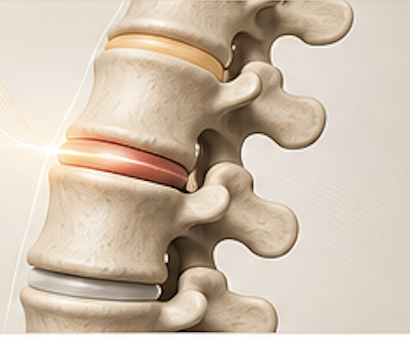
Spinal stenosis is a condition in which the spinal canal or nerve exit pathway becomes narrow, causing pressure on the spinal cord or spinal nerves. It commonly affects the lower back (lumbar spine) and neck (cervical spine).

This condition becomes more common with aging because spinal discs, ligaments and facet joints gradually degenerate. At JPRC Neuro Spine Centre, treatment is planned after clinical examination, neurological assessment and imaging correlation so patients receive the least invasive option that is still clinically safe.

Spinal stenosis canal narrowing and nerve compression treatment in Jaipur

Every Spinal Stenosis Patient Does Not Need Open Surgery

Accurate diagnosis and targeted interventional pain management can provide significant pain relief and improve mobility in many selected spinal stenosis patients.

  • Canal narrowing severity is checked with symptoms and MRI findings
  • Leg heaviness while walking may indicate neurogenic claudication
  • Interventional options can reduce nerve inflammation and pain in suitable cases
  • Surgery is considered only when compression or neurological risk demands it
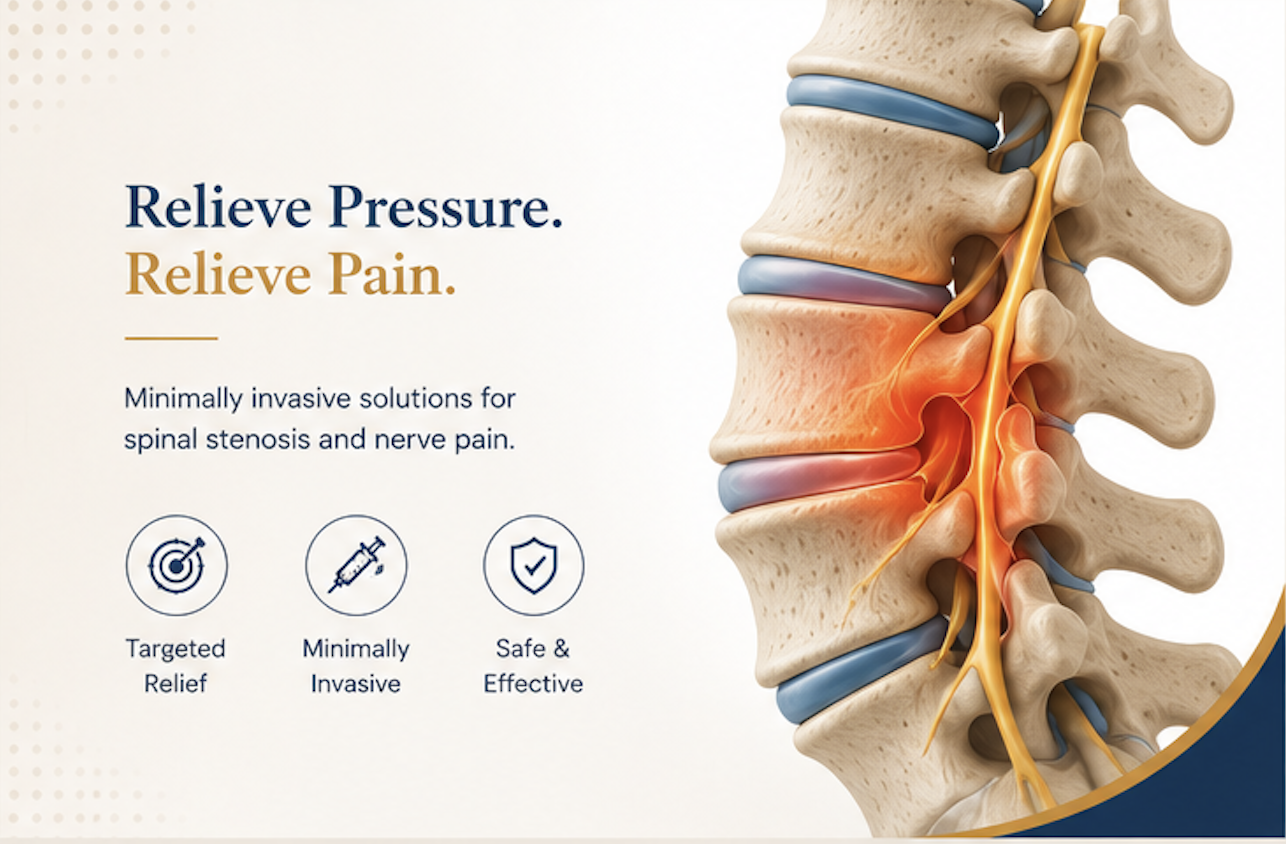
Minimally invasive spinal stenosis and nerve pain treatment in Jaipur

Relieve Pressure. Relieve Pain.

Spinal stenosis care at JPRC focuses on reducing nerve inflammation, identifying the exact pain generator and improving walking comfort through image-guided, minimally invasive spine interventions whenever clinically suitable.

  • Targeted epidural and transforaminal injections for irritated nerve roots
  • Facet joint procedures and RFA when arthritic joints add to stenosis pain
  • MIPSI-based options for selected patients who may avoid open surgery
  • Rehabilitation planning to improve posture, walking capacity and long-term mobility

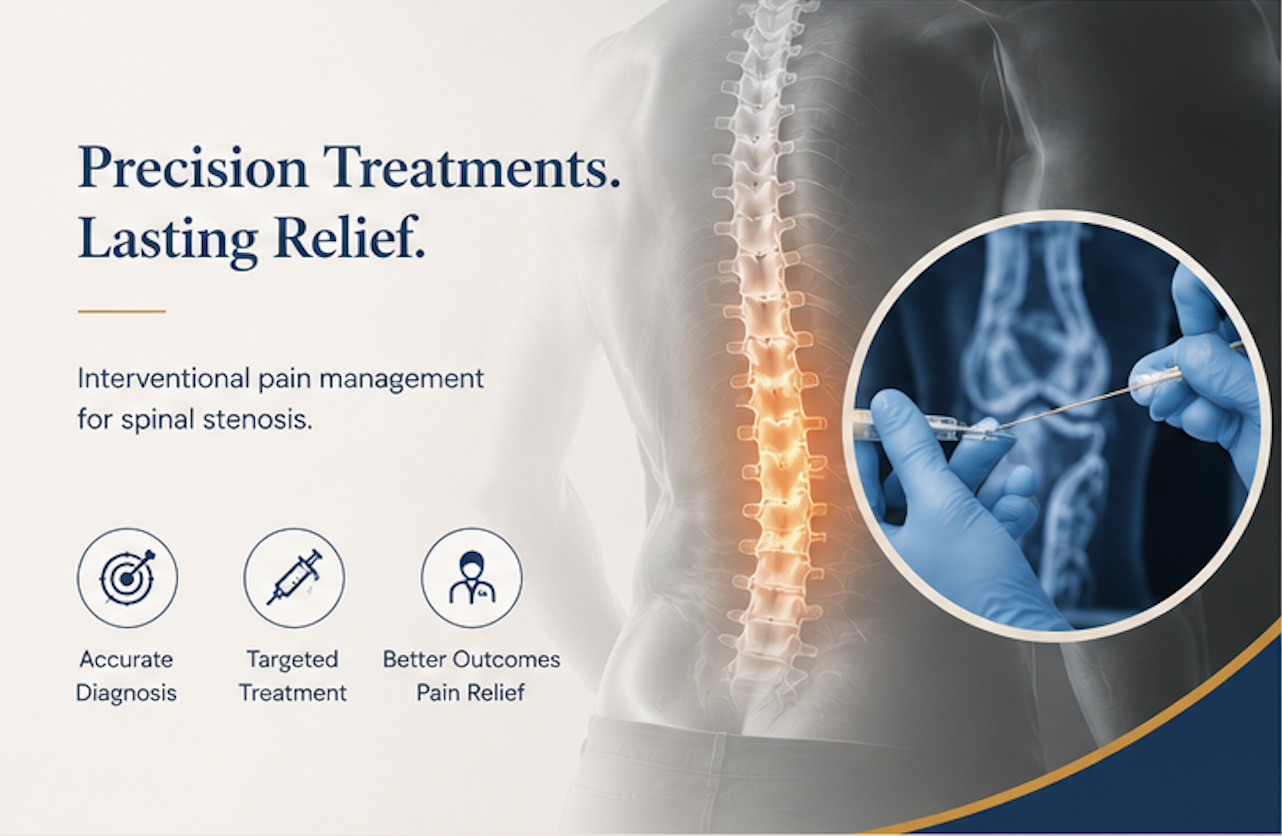
Precision Treatments for Spinal Stenosis

Treatment is planned after matching symptoms with MRI findings, neurological examination and walking limitation. This helps separate canal stenosis, disc bulge, facet arthritis and nerve irritation before choosing the procedure.

  • Accurate diagnosis before procedure selection
  • Image-guided needle placement for targeted pain relief
  • Better outcomes when treatment is combined with rehabilitation
Image-guided interventional pain management for spinal stenosis in Jaipur
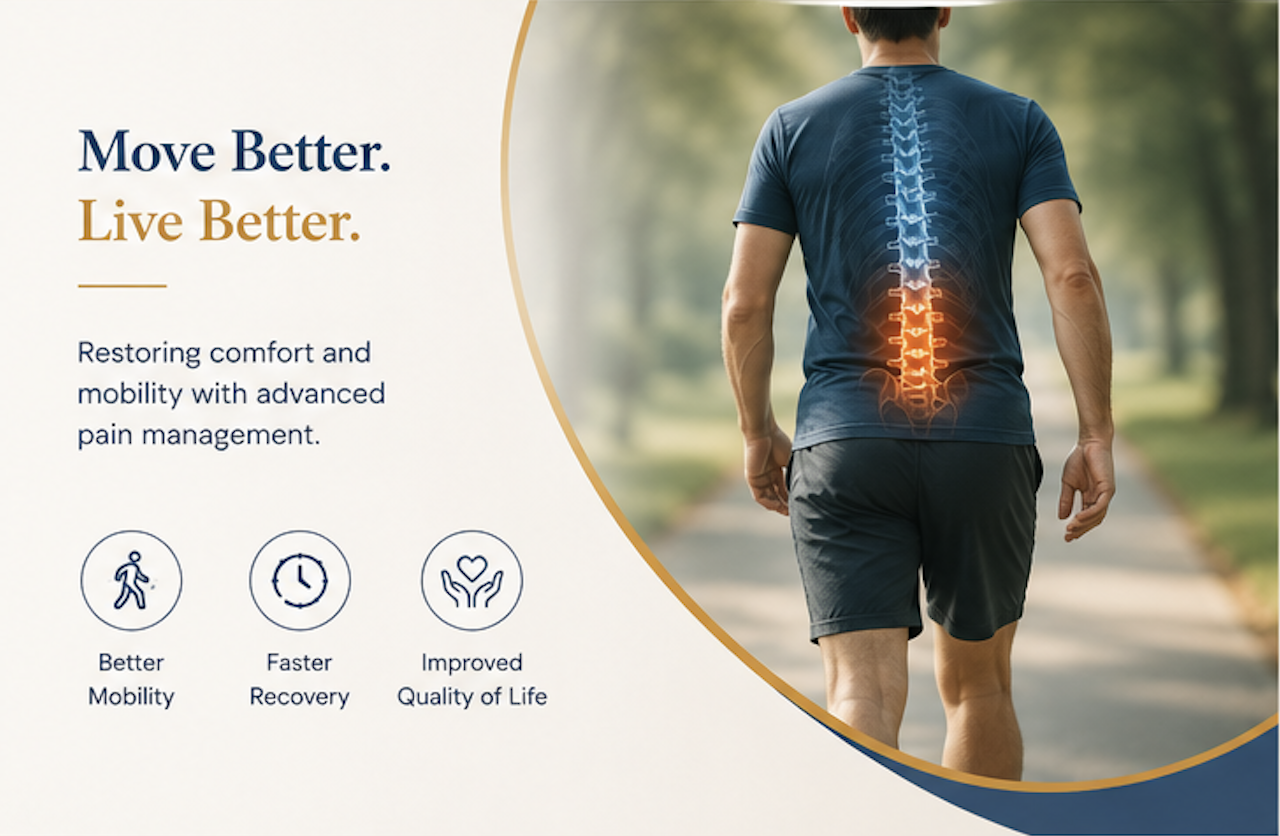
Spinal stenosis mobility improvement and advanced pain management in Jaipur

Move Better With Targeted Spine Care

The goal is not just pain reduction. For lumbar spinal stenosis, improving walking comfort, leg heaviness and daily activity is an important part of the treatment plan.

  • Supports better mobility in selected stenosis patients
  • May reduce repeated painkiller dependence
  • Helps patients return to safer activity with guided exercise
01

Why Does It Happen?

  • Age-related degeneration causing disc degeneration, ligament thickening and bone spur formation
  • Slip disc or disc bulge compressing nearby spinal nerves
  • Facet joint arthritis where enlarged arthritic joints narrow the canal or nerve exit pathway
  • Spondylolisthesis, where one vertebra slips over another and creates narrowing
  • Previous spine injury, previous spine surgery or congenital narrow spinal canal in selected patients
02

Common Symptoms

  • Lumbar spinal stenosis: low back pain, leg pain, leg heaviness while walking, tingling, numbness or weakness in the legs
  • Neurogenic claudication: walking difficulty that may improve after sitting or bending forward
  • Cervical spinal stenosis: neck pain, shoulder or arm pain, hand numbness, weak grip or balance difficulty
  • Severe cases may cause walking imbalance, progressive weakness or spinal cord compression symptoms

How Spinal Stenosis Is Diagnosed

A proper diagnosis is important before treatment because pain may come from canal narrowing, disc bulge, facet arthritis, spondylolisthesis, nerve irritation or more than one pain generator.

Clinical Examination

The doctor reviews pain pattern, walking capacity, leg heaviness, neurological symptoms, muscle strength, reflexes, balance and functional limitation.

MRI Spine

MRI is the most important test to evaluate canal narrowing, disc bulge, ligament thickening, spinal cord status and nerve compression.

X-Ray and Dynamic Views

X-rays help show degeneration, alignment and instability. Flexion-extension views may be used when spondylolisthesis or abnormal movement is suspected.

CT Scan or Nerve Studies

CT scan is useful in selected bony stenosis cases. Nerve conduction studies or EMG may be advised when nerve injury or weakness needs further clarification.

Spinal Stenosis Treatment Options

Many patients can be treated without major surgery using minimally invasive, image-guided interventional pain procedures. The aim is to reduce inflammation around compressed nerves, improve walking capacity and support long-term function with rehabilitation.

  • Epidural Steroid Injection - Medicine is injected near compressed nerves to reduce inflammation and pain in selected cases of leg pain, sciatica or neurogenic claudication
  • Transforaminal Nerve Root Block - A targeted injection around the affected spinal nerve root for radiating leg pain or nerve irritation
  • Facet Joint Injection - Helpful when facet joint arthritis is contributing to spinal stenosis pain or back stiffness
  • Radiofrequency Ablation (RFA) - Uses controlled heat energy to block pain-transmitting nerves for longer-lasting relief in suitable facet-mediated pain
  • Minimally Invasive Spine Interventions / MIPSI - Selected patients may benefit from image-guided decompression-focused procedures that aim to reduce pressure around nerves and avoid open surgery where safe
  • Physiotherapy and Rehabilitation - Core strengthening, posture correction, flexibility exercises and walking rehabilitation improve long-term outcomes
  • Surgical Evaluation - Needed when there is severe spinal cord compression, progressive neurological weakness, bladder or bowel symptoms, or failure of appropriate non-surgical care

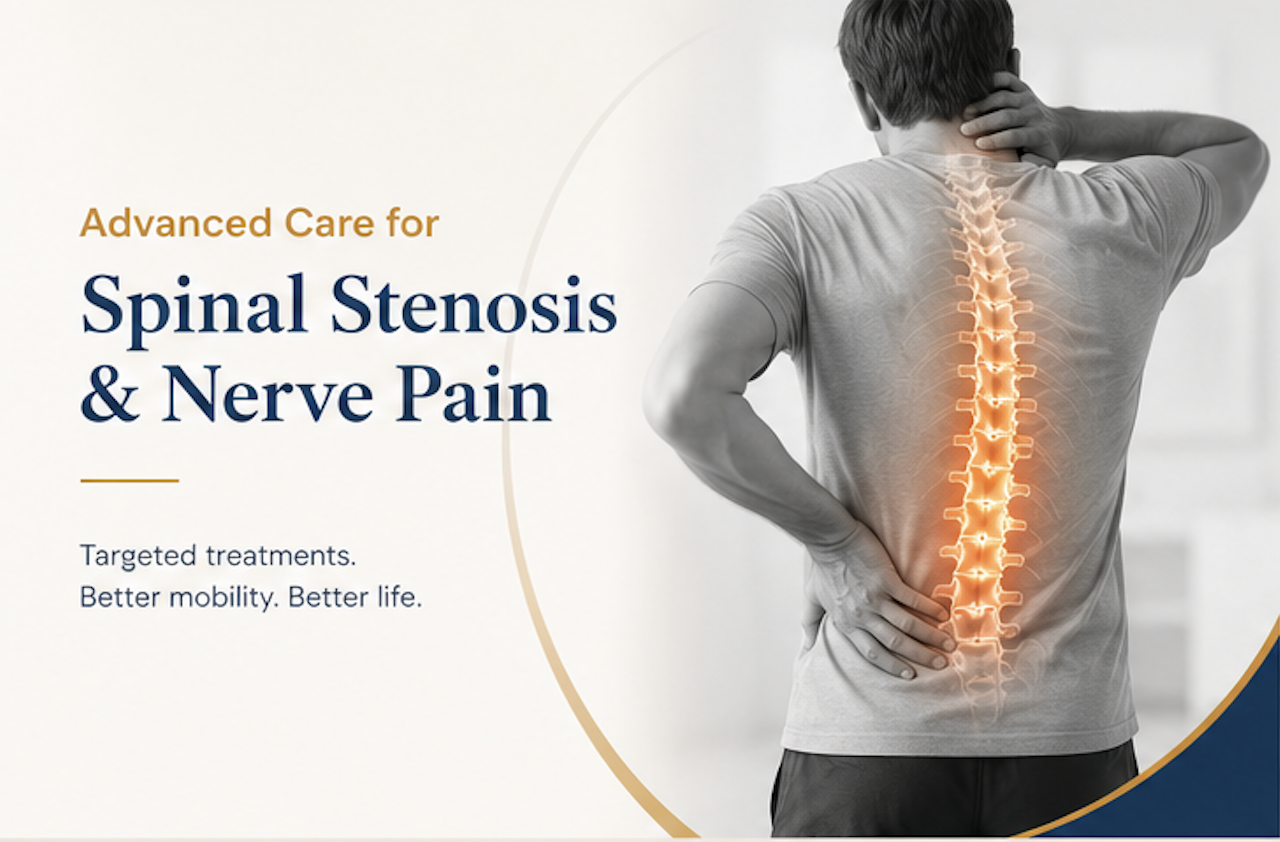
Advantages of Interventional Pain Management

For suitable spinal stenosis patients, interventional care can target irritated nerves and painful joints without the tissue trauma of open surgery.

  • Minimally invasive, image-guided day-care procedures in selected patients
  • Targeted pain relief for nerve inflammation, radiating leg pain and facet-related pain
  • Less recovery time and reduced dependence on repeated painkillers
  • May delay or avoid surgery in carefully selected cases
  • Can improve walking capacity, mobility and quality of life
  • Combined with rehabilitation for better long-term function

Do Not Ignore These Warning Signs

These signs may indicate a serious problem and should be evaluated urgently instead of waiting for routine consultation.

  • Loss of bladder or bowel control, numbness around the private area, or sudden numbness in both legs
  • Progressive leg or arm weakness, foot drop, weak grip, or rapidly worsening neurological symptoms
  • Severe walking imbalance, repeated falls, or symptoms suggesting spinal cord compression
  • Severe back or neck pain after trauma, fever, unexplained weight loss, or suspected infection

Common Questions

Can spinal stenosis be treated without major surgery?

Many selected spinal stenosis patients can improve with medicines, rehabilitation and image-guided interventional pain procedures such as epidural steroid injection, transforaminal nerve root block, facet procedures or RFA. Surgery is reserved for severe compression, progressive weakness or failed non-surgical care.

Why does leg pain improve when I sit or bend forward?

In lumbar spinal stenosis, bending forward can temporarily create more space in the spinal canal, reducing nerve pressure. This pattern is often called neurogenic claudication and needs proper clinical and MRI correlation.

Which test is most important for spinal stenosis?

MRI spine is usually the key test because it shows canal narrowing, disc bulge, ligament thickening and nerve compression. X-ray, CT scan or nerve studies may be added in selected cases.

When is surgery needed for spinal stenosis?

Surgery may be needed when there is severe spinal cord compression, progressive neurological weakness, bladder or bowel symptoms, severe walking imbalance, or failure of conservative and interventional treatments.

Need a Pain Specialist Opinion?

Bring your reports or share your symptoms with JPRC Neuro Spine Centre, Jaipur.

Are You Experiencing

These Symptoms?

Don’t ignore the signs your spine is trying to tell you. Early evaluation can help you avoid surgery and get back to life.

Get Your MRI Reviewed
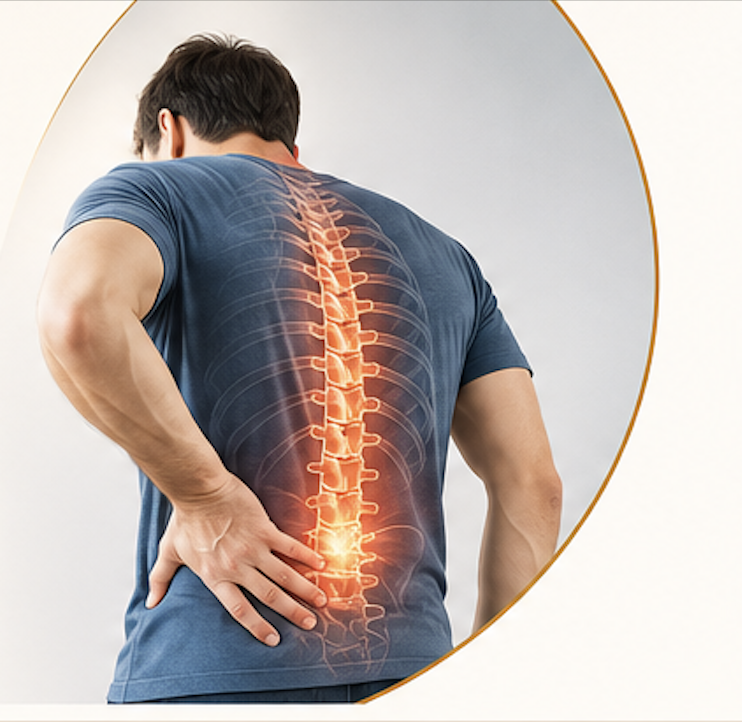
Patient holding lower back in pain
Chronic Back or Leg Pain?
Tingling, Numbness or Weakness?
Difficulty Walking or Sitting?
Recurring Sciatica or Slip Disc Pain?
Surgery Recommended?
Pain Relief Only Temporary?

Before Considering Surgery,

Explore Advanced Minimally Invasive Options

Most patients come to us after medicines, physiotherapy and injections have failed.

Book Consultation
Spine treatment visual

Why Patients Choose JPRC

Why Patients Choose JPRC

30,000+ Patients Treated
35+ Years Experience
No Surgery Approach
Same-Day Procedures

Treatment Benefits

Advanced Spine Treatment Advantages

Image Guided Precision using advanced imaging technology
Minimally Invasive Small incision, less pain, minimal risk
Day Care Procedure Go home the same day in most cases
Rapid Pain Relief Get back to your life sooner

PATIENT SUCCESS STORIES

Patient Success Stories

Hear directly from patients who found relief through advanced minimally invasive pain treatments at JPRC.