Interventional Pain Management
CRPS Treatment Options
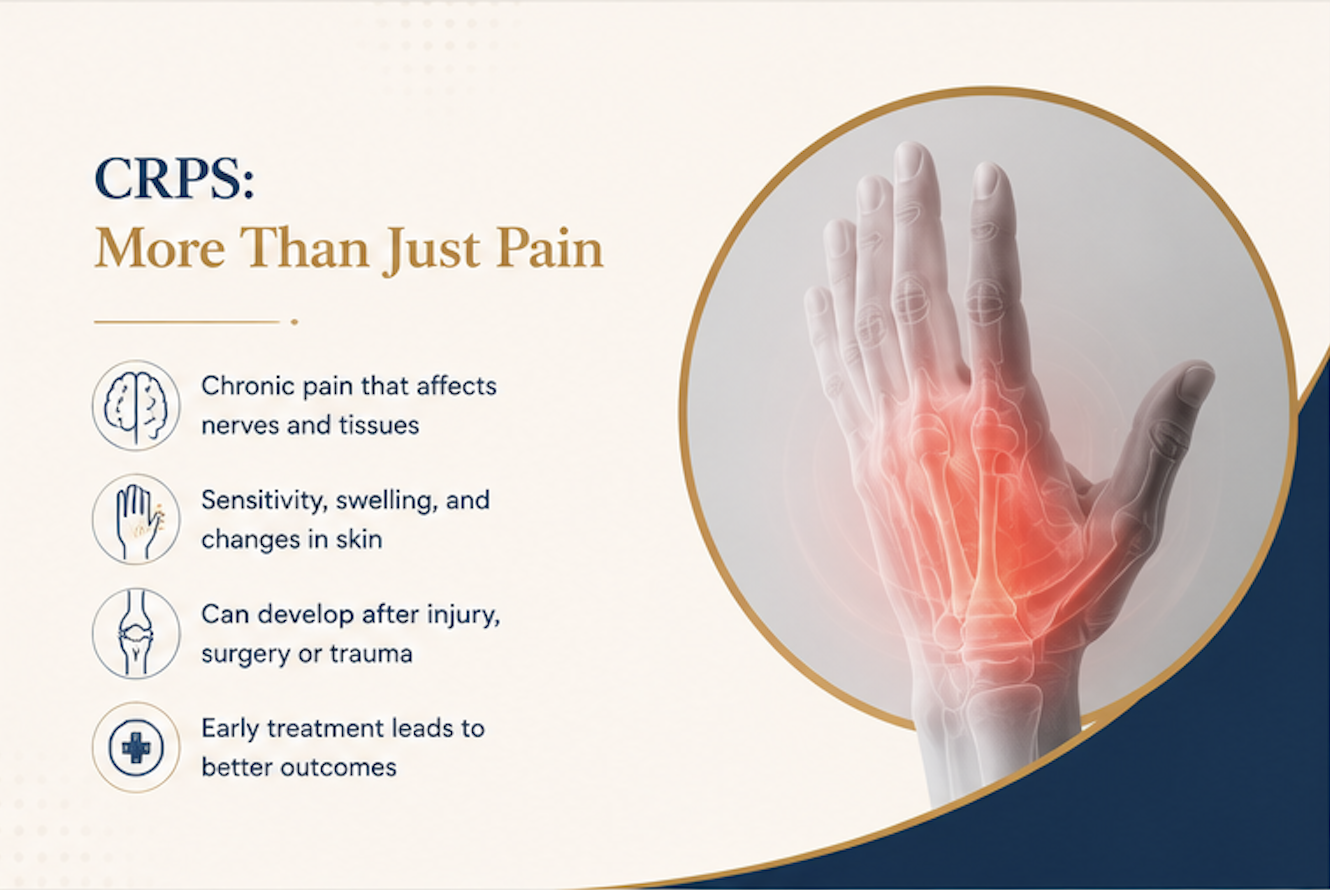
Early treatment is very important to prevent long-term disability. Interventional pain management helps control pain so patients can participate better in rehabilitation and restore limb function.
- Sympathetic Nerve Block - Helps reduce abnormal sympathetic activity, improve blood flow, decrease pain and improve movement in selected CRPS patients
- Stellate Ganglion Block - Used for CRPS affecting the hand, arm and upper limb
- Lumbar Sympathetic Block - Used for CRPS affecting the leg, foot and lower limb
- Epidural Infusion Therapy - Selected severe CRPS patients may benefit from epidural pain control techniques
- Peripheral Nerve Blocks - Helpful in selected localized pain cases and diagnostic pain mapping
- Radiofrequency Procedures - Targeted nerve modulation may help chronic pain control in selected patients
- Spinal Cord Stimulation (SCS) - Advanced treatment for severe chronic CRPS not responding to conservative care; may reduce pain intensity, improve sleep, quality of life and limb function
- Trigger Point Injection - Useful for associated muscle spasm and myofascial pain
- Physiotherapy and Rehabilitation - Gentle mobilization, desensitization therapy, mirror therapy, functional rehabilitation and gradual movement exercises are essential
- Psychological Support - Chronic pain can affect mood, sleep, anxiety and daily functioning, so a multidisciplinary approach often gives better outcomes